
Industrial Evaporators for Concentration & Solvent Recovery
Ecoprocess manufactures a complete range of evaporation systems for concentration, solvent recovery, and zero liquid discharge applications. Our evaporators are designed for energy efficiency, heat-sensitive products, and operation under vacuum conditions.
Applications: Pharmaceutical concentration, chemical processing, solvent recovery, wastewater treatment, and food processing.
Evaporators Technologies
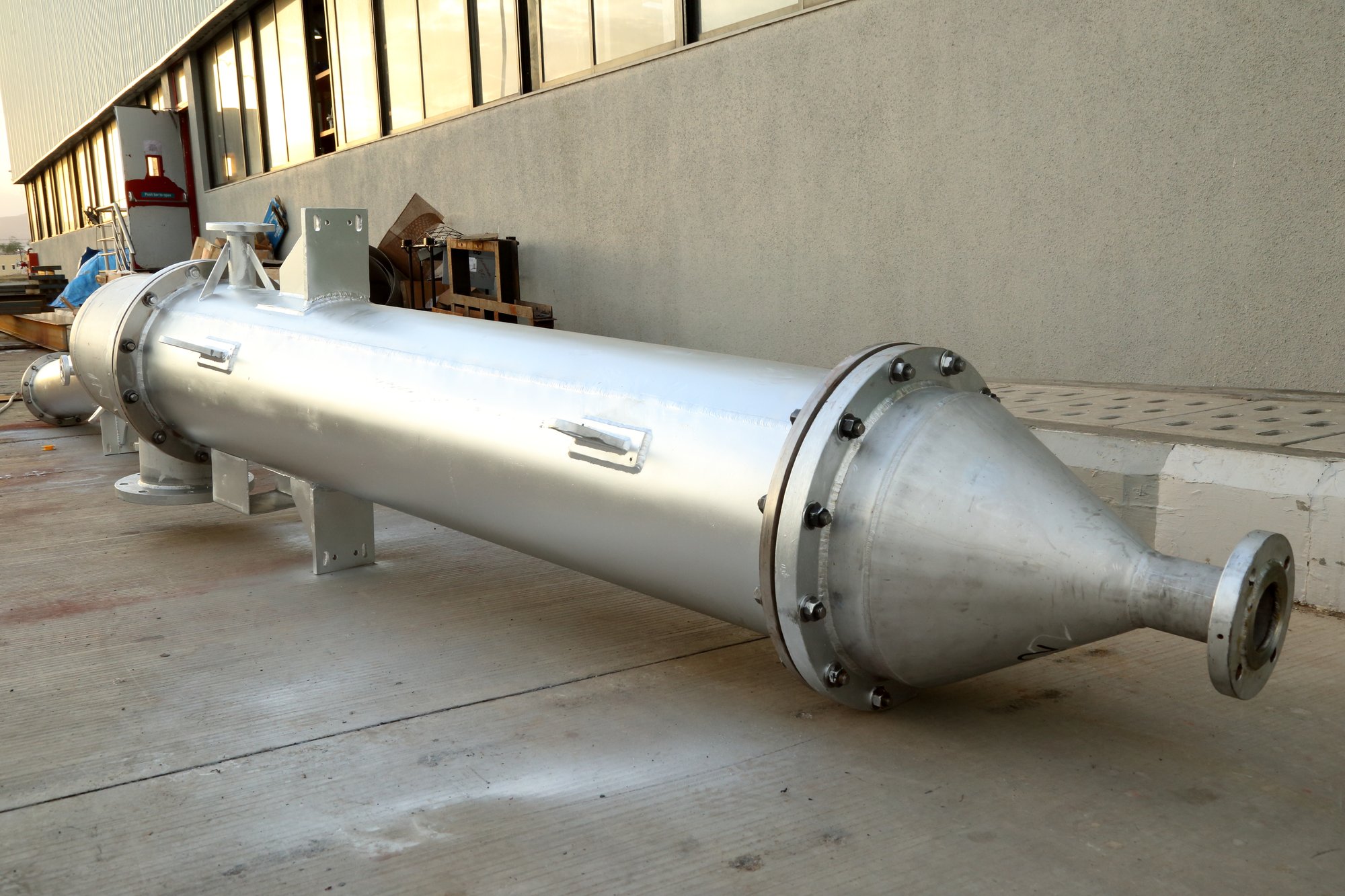
Rising Film Evaporator (RFE)
A RFE combines a vertical shell & tube heat exchanger (calandria) with a vapor-liquid separator mounted on top. Feed enters at the bottom and rises through the tubes as vapor is generated, creating a thin film on tube walls.
How It Works:
- Feed enters at bottom of calandria
- Heating medium on shell side provides heat
- Vapor generation pushes liquid upward as a film
- Mixture separates in vapor-liquid separator at top
- Good thermal performance from high vapor velocity
Features:
✓ No circulation pump needed (thermosiphon action)✓ Multiple effect arrangements available
✓ Can handle small quantities of suspended particles
✓ Effective for moderately heat-sensitive liquids
Applications:
- Concentration of dilute plant extracts (water or organic solvent)
- Re-boiler to distillation columns
- Pre-concentration before final drying
- Solvent recovery from product or waste streams
Pilot Plant Available:
Test with your materials before full-scale investment
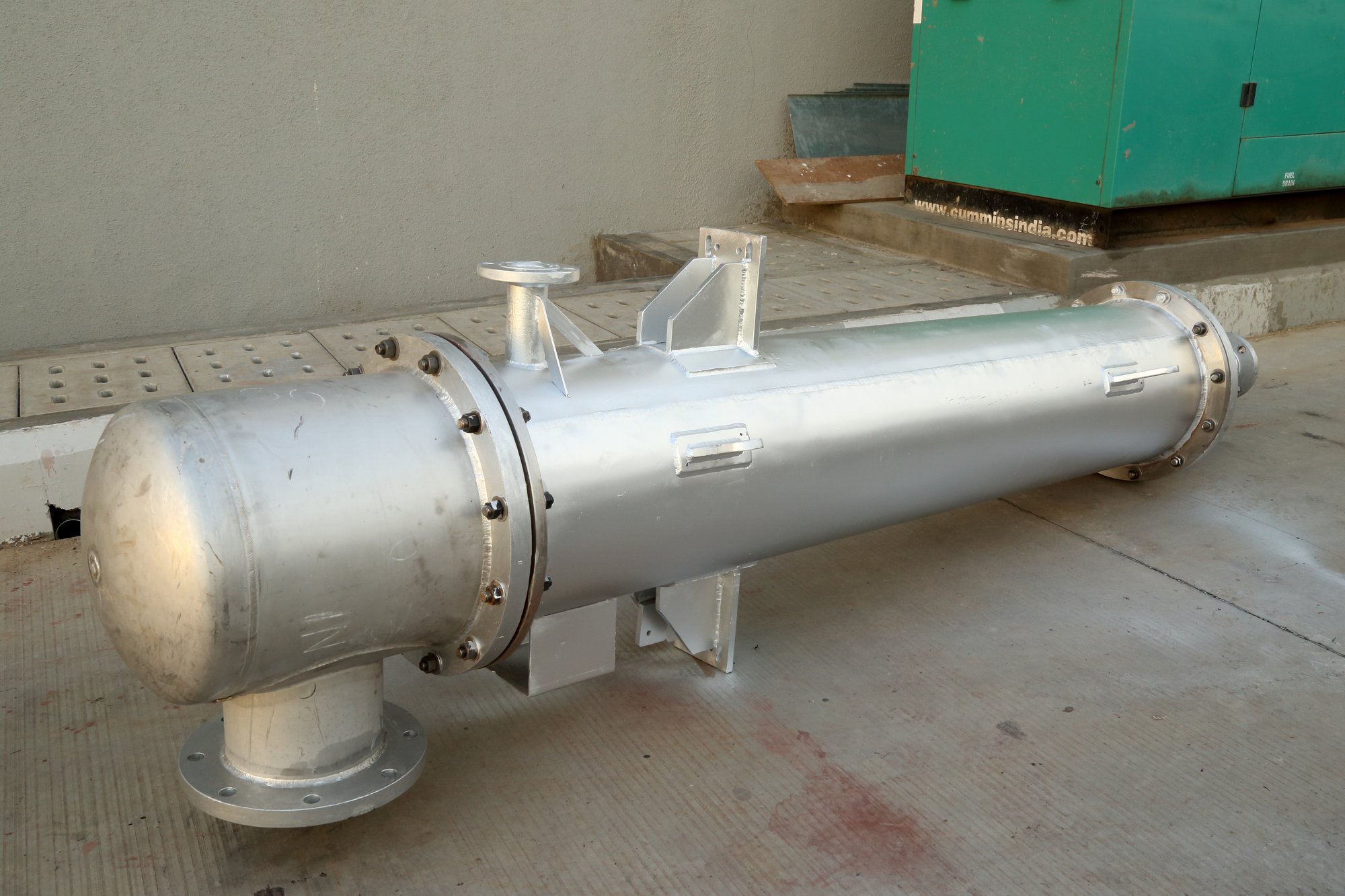
Falling Film Evaporator (FFE)
A Falling Film Evaporator combines a vertical shell & tube calandria with a vapor-liquid separator at the bottom. Feed is distributed at the top and flows down tube walls as a thin film, with vapor moving co-currently at the tube center.
How It Works:
- Feed enters at top through distributor
- Liquid flows down as thin film on inside tube surface
- Heating medium on shell side provides heat
- Vapor moves co-currently with liquid at tube center
- Vapor drag increases turbulence and heat transfer
- Separation occurs at bottom
Features:
✓ Gentle evaporation with short residence time✓ Small hold-up for quick response to changes
✓ Suitable for heat-sensitive products
✓ Multiple effect arrangements available
✓ Circulation pump maintains proper wetting rate
Applications:
- Concentration of heat-sensitive pharmaceutical products
- Solvent recovery from heat-sensitive streams
- Re-boiler to distillation columns
- Pre-concentrator before thin film evaporator
- Dehydration of lubricating oils
Note: Pilot plant testing available to validate performance
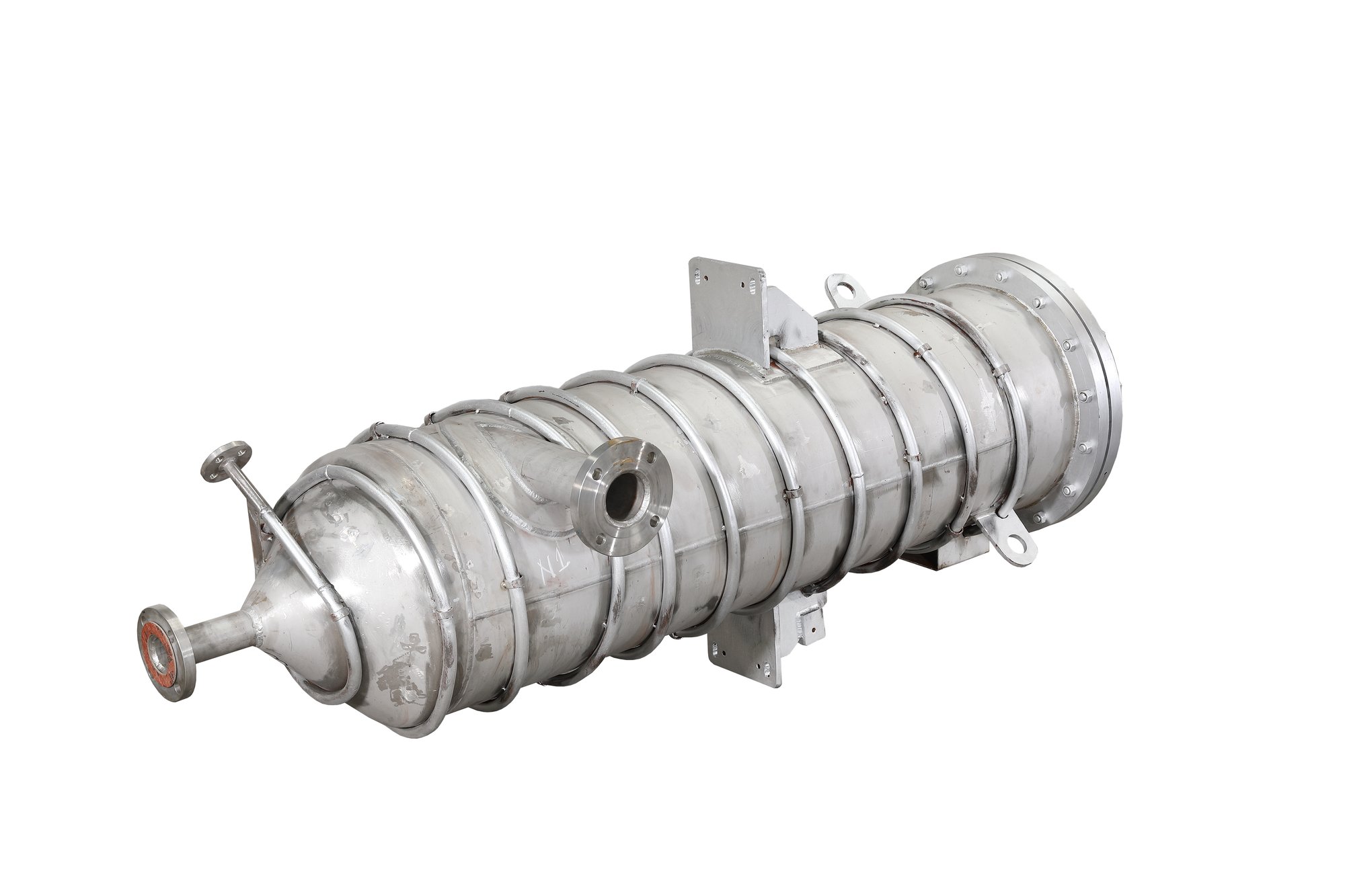
Forced Circulation Evaporator (FCE)
A Forced Circulation Evaporator combines a shell & tube heat exchanger, separator, and high-flow circulation pump. The pump maintains high liquid velocity in tubes, and hydrostatic head suppresses boiling inside tubes to minimize scaling.
How It Works:
- Axial flow pump with high discharge, low head
- High velocity maintained in heat exchanger tubes
- Hydrostatic head above tube sheet suppresses boiling
- Minimal scaling during evaporation
- Separation occurs in dedicated vapor-liquid separator
Features:
✓ Can handle slurries with 30-40% suspended solids✓ High tube velocity with minimum power consumption
✓ Correct separator design ensures clear distillate
✓ Minimized tube scaling
✓ Multiple effect arrangements available
Applications:
- Pre-concentration of effluent streams before drying
- Wastewater concentration (organic and inorganic salts)
- Evaporative crystallization
- Handling of viscous and fouling liquids
Process Design:
Multiple effect systems designed to reduce steam consumption
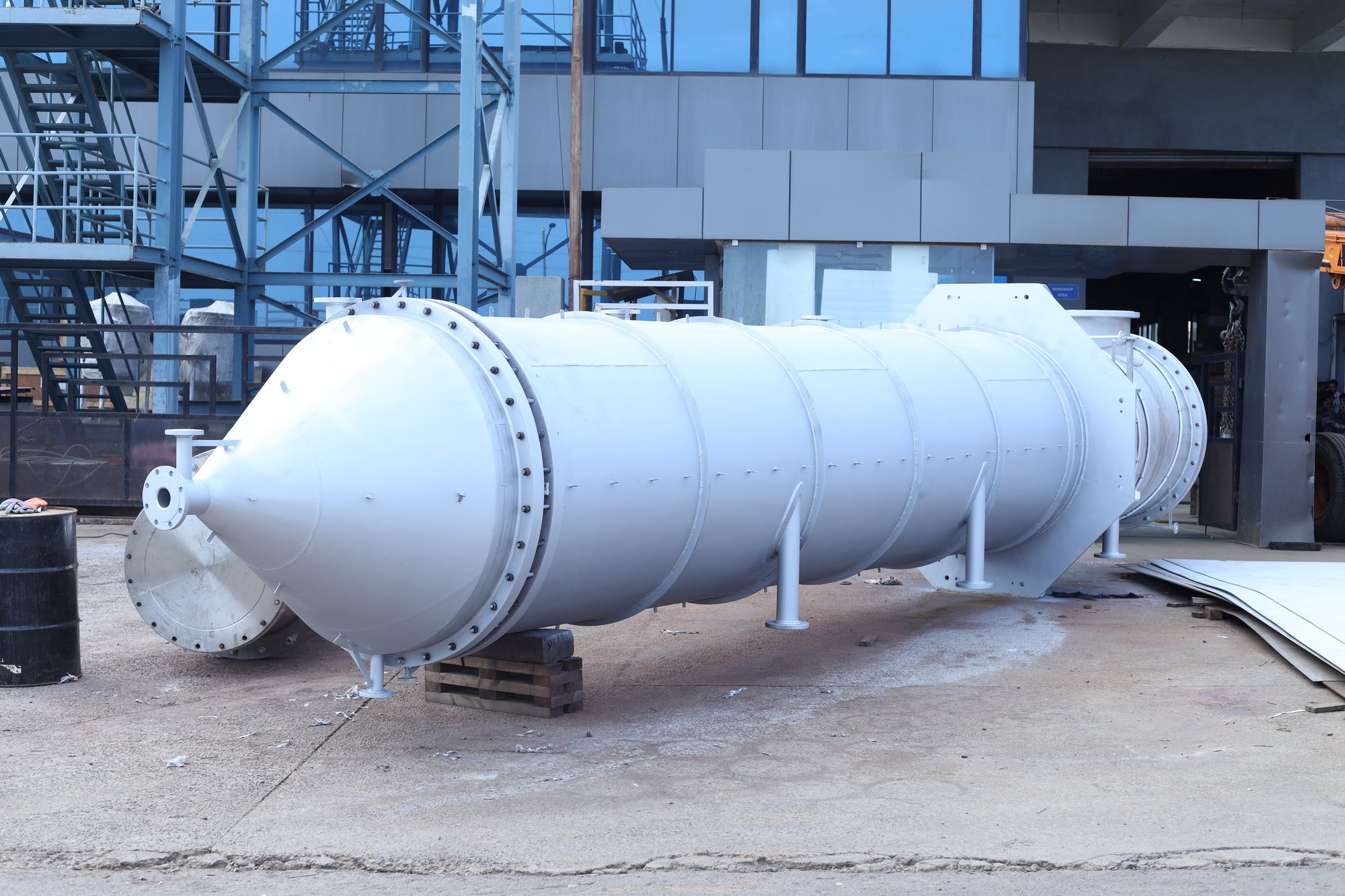
Agitated Thin Film Evaporator (ATFE)
A Thin Film Evaporator consists of a jacketed shell and high-speed rotor assembly. The rotor blades spread feed into a thin film on the heated surface. This design is ideal for heat-sensitive, viscous, and fouling products.
How It Works:
- Feed enters tangentially at top
- Rotor blades spread feed evenly into thin film
- Heating medium in jacket evaporates volatiles
- Vapor flows counter-currently and exits through top
- Concentrate exits at bottom
- Entrainment separator ensures clean vapor
Features:
✓ Residence time of only seconds - ideal for heat-sensitive products✓ Single pass evaporation without recirculation
✓ Intense agitation prevents scaling
✓ Good turndown capability, low product hold-up
✓ Operating pressure down to 1 mbar(a)
✓ Different rotor designs for various applications
Applications:
- Concentration of bulk drugs, fine chemicals, agrochemicals
- Re-refining of lubricating & transformer oils
- Vacuum distillation of fatty acids, amines, esters
- Concentration of oleo-resins & plant extracts
- Stripping of monomers and silicone oils
- Solvent and product recovery from residues
- Glycerin recovery
Pilot Plant Facility Available
Short Path Distillation Unit (SPDU)
Short Path Distillation operates similarly to thin film evaporators but includes an internal condenser inside the rotor cage. The extremely short vapor path eliminates pressure drop, enabling distillation at ultra-high vacuum (0.001 mbar).
How It Works:
- Feed distributed into thin film on shell inside surface
- Heating medium in jacket evaporates volatiles
- Vapor travels short distance across rotor to internal condenser
- Minimal pressure drop enables ultra-high vacuum
- Distillate and bottoms collected separately
Rotor Blade Options:
- PTFE or Graphite Wiper Elements
- Metal Wiper Elements
- PTFE or Graphite Rollers
Features:
✓ Operating pressure as low as 0.001 mbar(a)✓ Distillation at lower temperature prevents degradation
✓ Very high boiling components can be distilled
✓ Residence time of few seconds
✓ Single pass operation
✓ Good turndown capability
✓ Metal blades at high temperature offer flexibility
Applications:
- High vacuum distillation of bulk drugs
- Natural or synthetic vitamins, esters, epoxy resins
- Fatty acids, glycerides, tocopherols
- Re-refining of lubrication oils
- Purification of natural and synthetic waxes
Pilot Testing: Validate your process parameters before full scale
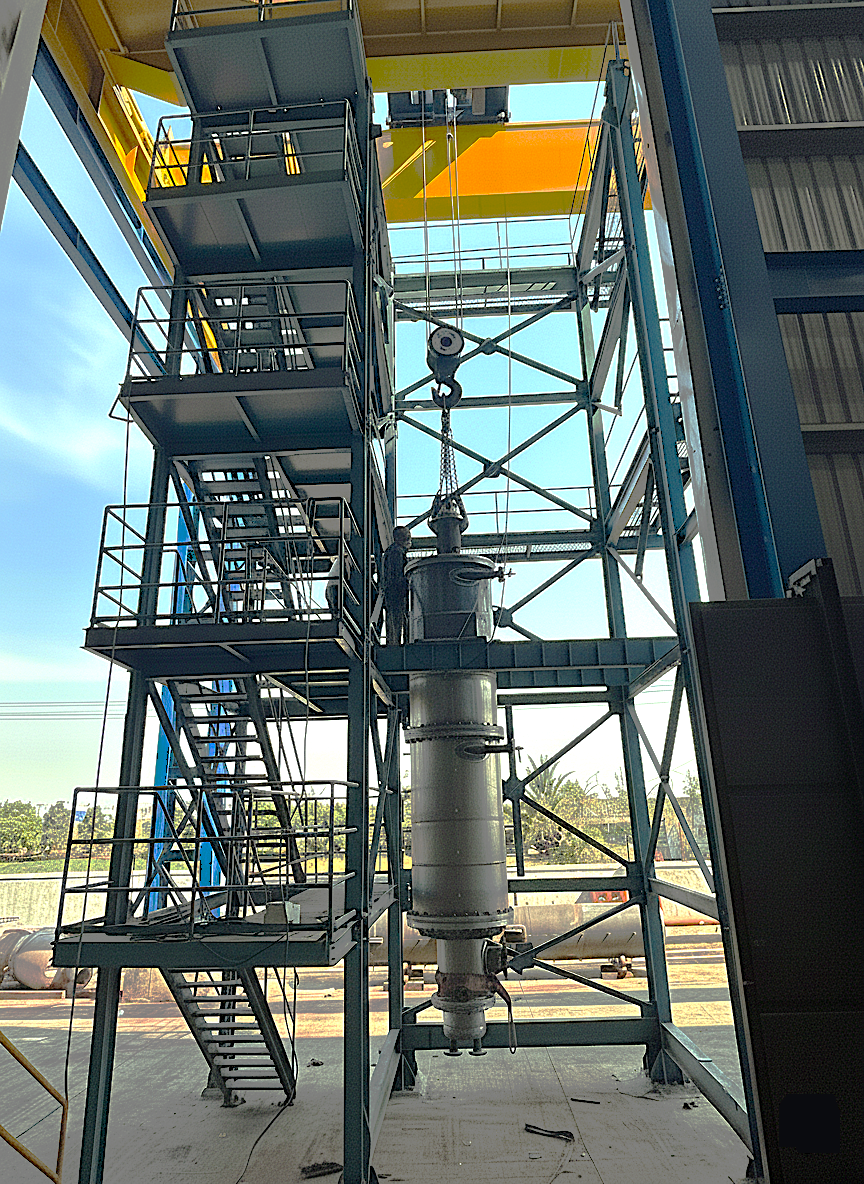
Multiple Effect Evaporator (MEE) Systems
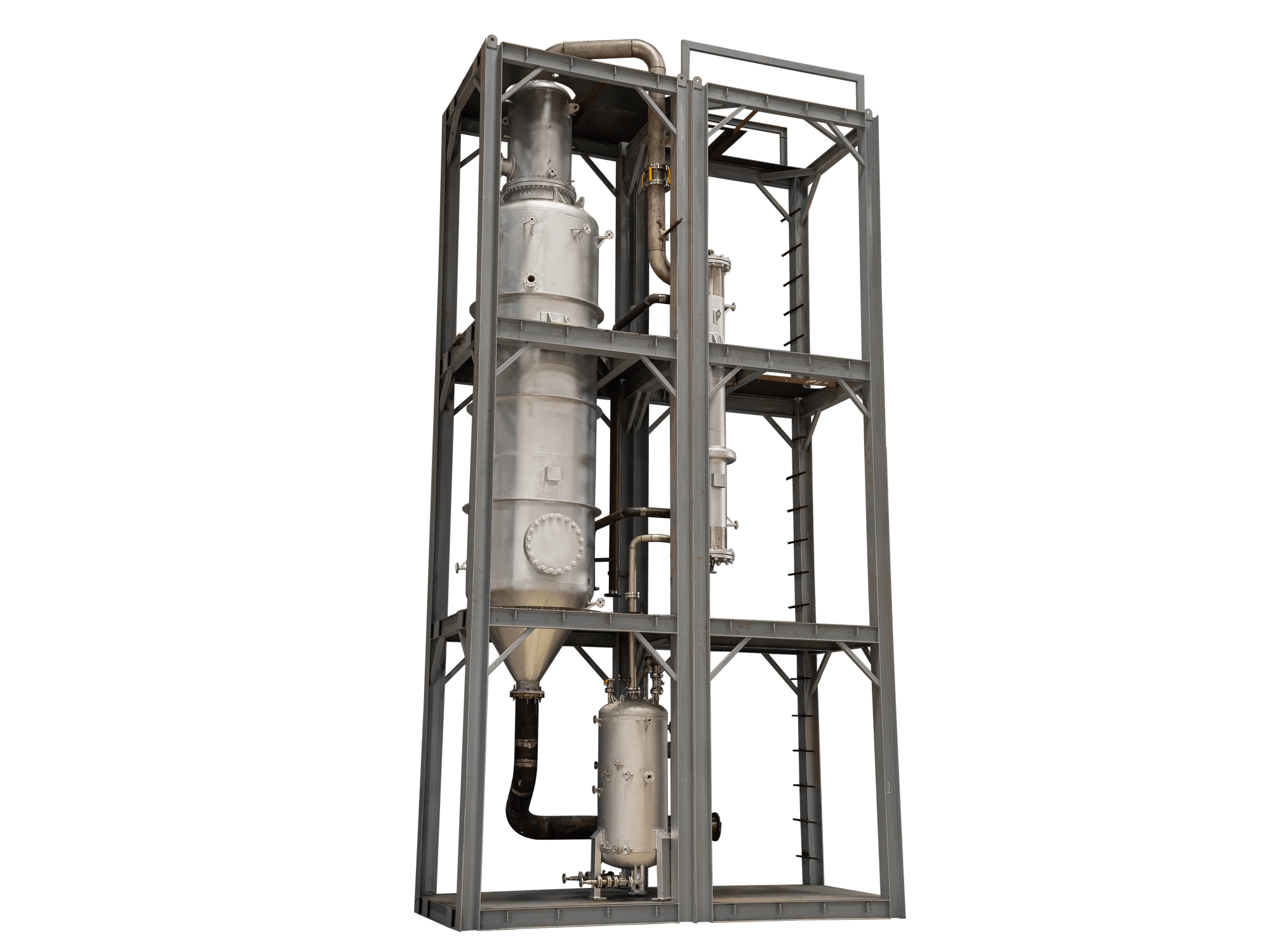
Multiple Effect Evaporators use vapor from one effect as a heating medium for the next effect, dramatically reducing steam consumption. Can be configured as falling film or forced circulation type.
System Design:
- 2 to 6 effects in series
- Optional thermo-vapor compressor (TVC)
- Steam economy optimization
- Forward, backward, or mixed feed flow
Benefits:
✓ Reduces steam consumption by 50-85%✓ Lower operating costs
✓ Suitable for large evaporation loads
✓ Optimized based on steam and power costs at site
Applications:
- Zero liquid discharge (ZLD) systems
- Wastewater concentration
- Large-scale pharmaceutical production
- Chemical effluent treatment
Custom Engineering: Each system designed for specific requirements
which evaporator is right for you
| Type | Best For | Vacuum Level | Heat Sensitivity | Viscosity | Solids Handling |
|---|---|---|---|---|---|
| Rising Film |
Moderate heat sensitivity |
Moderate |
Moderate |
Low-Medium |
Small quantities |
| Falling Film |
Heat-sensitive products |
High vacuum |
High |
Low-Medium |
Minimal |
| Forced Circulation |
Slurries, scaling liquids |
Moderate |
Low-Moderate |
High |
Up to 40% solids |
| Thin Film |
Very heat-sensitive |
High vacuum |
Very High |
High |
Minimal |
| Short Path |
Ultra-sensitive, high boiling |
Ultra-high vacuum |
Very High |
High |
None |
Pilot Plant Testing Available
Validate Before You Invest
Test your process with actual materials at our pilot plant facility:
- Confirm product quality and stability
- Establish precise operating parameters
- Validate energy and utility requirements
- Generate scale-up data
- Train operators on equipment
Available Equipment
- Lab-scale evaporators
- Pilot thin film units
- Distillation systems
- Complete mini-plants
technical specifications
Dryers are custom-designed based on feed load, moisture % reduction, solvent recovery needs, heat medium, and drying kinetics.
| Parameter | Typical Range | Notes |
|---|---|---|
| Feed Flow Rate | Custom | Based on customer process load |
| Operating Pressure | Vacuum → Atmospheric | Depending on evaporator type |
| Steam Pressure | 3–7 bar | For FFE/FCE/MEE systems |
| Steam Economy | 1.5 to 6+ | Based on MEE effects |
| Temperature Range | 45–110°C | Product & solvent dependent |
| Heat Transfer Coefficient | As per design | Material-specific |
| Materials | SS316L / Duplex / Hastelloy | Based on corrosive load |
| Automation | PLC–HMI, SCADA | Optional DCS integration |
| Utilities | Cooling water, steam, condensate | Provided in PFD/P&ID |
Applications & Industries
Applications
Concentration of chemicals & intermediates
API & pharmaceutical evaporation
Solvent recovery & purification
Agrochemical concentration
High-TDS effluent evaporation
ZLD evaporation trains
industries served
Pharmaceuticals
Chemicals
Agrochemicals
Food & Beverage
Petrochemicals
Dyes & Intermediates
Wastewater Treatment
ZLD plants
Key Features
-
High thermal energy
-
Fouling-minimising designs
-
Uniform heat distribution
-
ATEX configurations available
-
Corrosion-resistant metallurgy (SS316L, Duplex, Hastelloy)
-
CIP/SIP
-
PLC-HMI automation with full instrumentation
-
Modular skid or on-site installation
-
High vacuum capability for low-temperature operation
system components & customer benefits
System Components
Heating exchanger (falling film/ forced circulation)
Vacuum system (dry screw/ liquid ring/ booster)
Vapor-liquid separator
Recirculation pump
Condenser
Instrumentation (PT, TT, LT, FT)
Pre-heater
Flash Drum
Piping manifold
CIP skid
customer benefits
Reduced scaling & fouling downtime
Lower energy consumption via multi-effect design
Stable concentration profiles
Higher product purity
Lower operating cost with MVR/ TVR
Ready for ZLD implementation